Responsibility at an early age
Heinrich Wilhelm lost his mother at four and his father at twenty-one. After his father’s death, he shared responsibility for the family and developed an independent career beyond agriculture.
G18 · Altenbochum line · Altenbochum · Bochum
Franz’s brother left the exclusively agricultural path and, with Agnes Kabeisemann, established a Bochum entrepreneurial family.
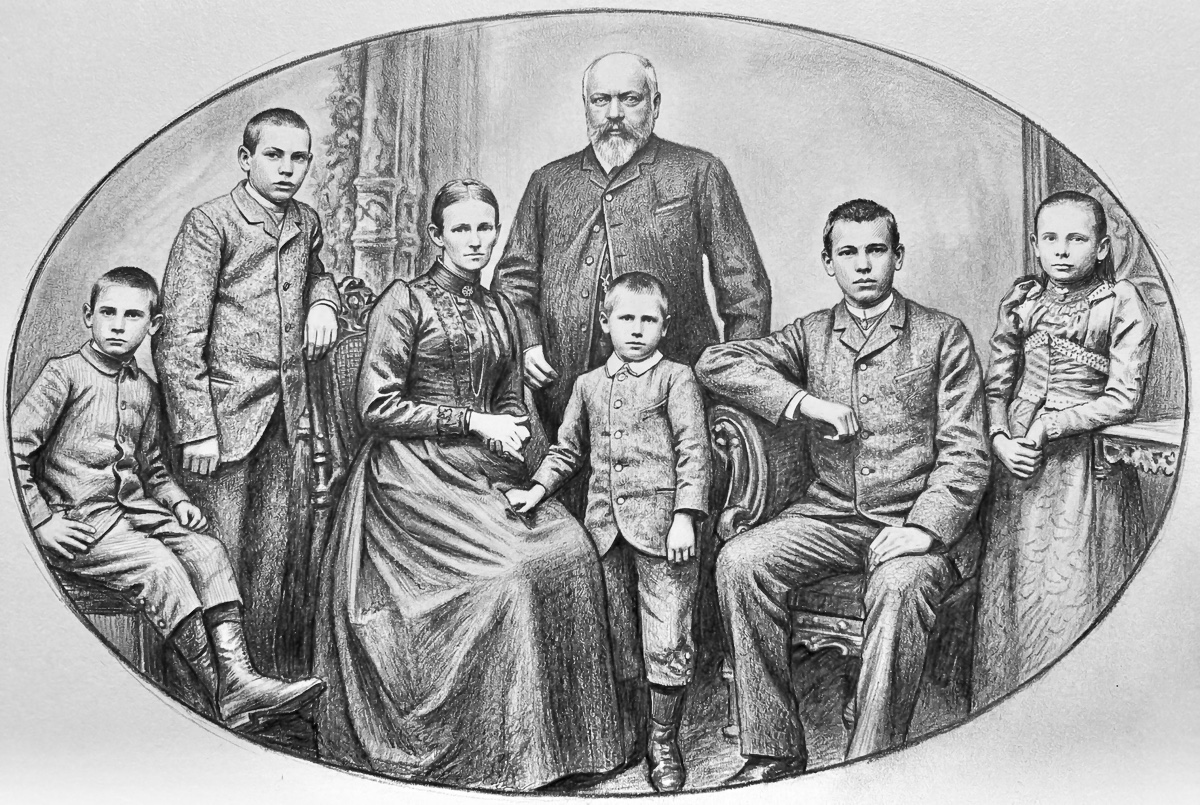
Key facts and family background
Heinrich Wilhelm, a younger son of Georg Johann Heinrich Friemann and Maria Clementine Dahm, married Agnes Kabeisemann of Goldhamme in 1870. By 1885 he was operating a grain distillery and compressed-yeast factory on Kanalstraße in Bochum.
Basis: Family Chronicle, Volume 1
The biographical account
Documented facts, family relationships, and historical interpretation are kept clearly distinguishable.
Heinrich Wilhelm lost his mother at four and his father at twenty-one. After his father’s death, he shared responsibility for the family and developed an independent career beyond agriculture.
He married Agnes Kabeisemann in 1870. They had nine children. Heinrich Wilhelm also became guardian of the children of his sister Maria Agatha after her early death, an example of family solidarity emphasized in the chronicle.
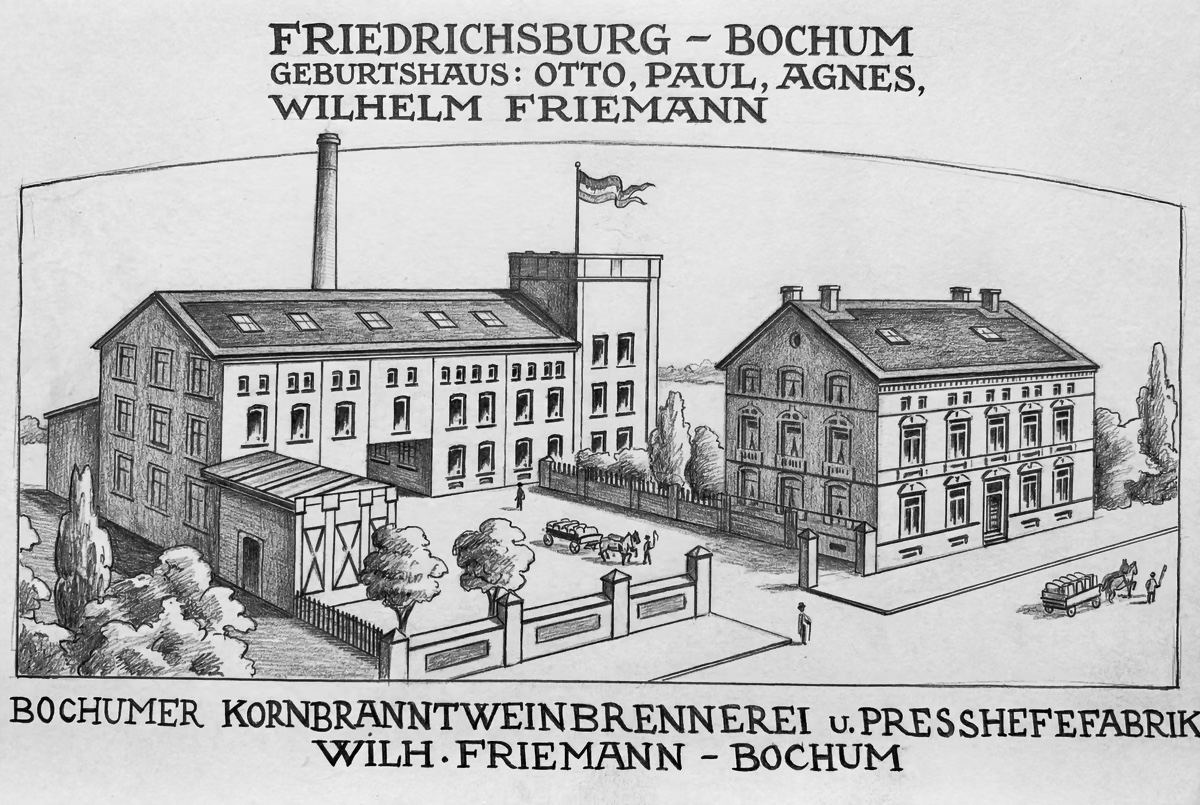
From 1885 Heinrich Wilhelm is documented as the owner of a distillery at Kanalstraße 26 in Bochum. The surviving business name describes it as the ‘Bochum grain distillery and compressed-yeast factory Wilhelm Friemann.’ The chronicle cautiously classifies it as a medium-sized family business processing agricultural raw materials for the growing urban market. He was part of Bochum’s rising commercial middle class rather than a large-scale industrialist. After his death in 1909, his son Wilhelm continued parts of the business, which survived at least into the 1920s.
Heinrich Wilhelm and Agnes represent the transition from a farming branch to urban enterprise. Their children included brewery and factory owners, merchants, and a chronicler. Industrialization thereby became part of the family’s own history.
Source note This biographical account follows the presentation and references in Friemann aus Altenbochum—Family Chronicle, Volume 1, fourth edition, 2026. Missing partner names, descendants, and uncertain details remain explicitly identified. Historical reconstructions do not replace individual documentary evidence.